Work beginning on the Moore’s Creek Booster Pump Station
New Update: Wastewater Wednesdays!
Last week, crews continued completing electrical and cabling work across the Nereda basins. These connections link key treatment equipment, including the sludge thickeners and water level correction tanks, to the facility’s electrical building so they can communicate with the plant’s monitoring and control systems. Additional work included installation of gate control actuators and continued programming of the facility’s security systems.
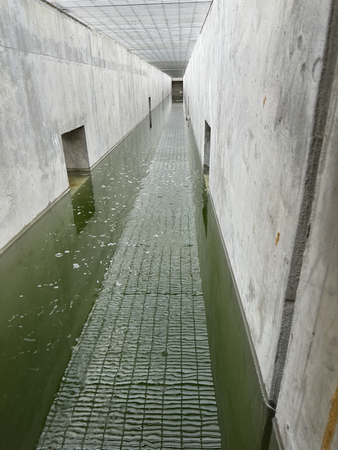
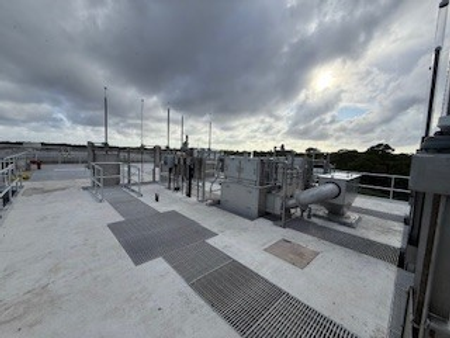
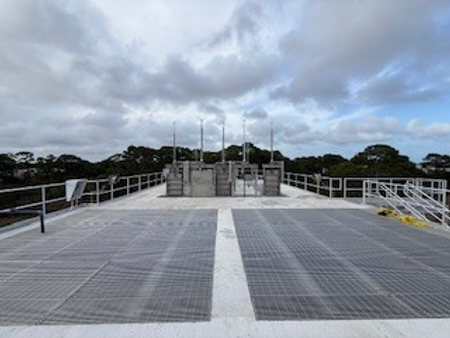
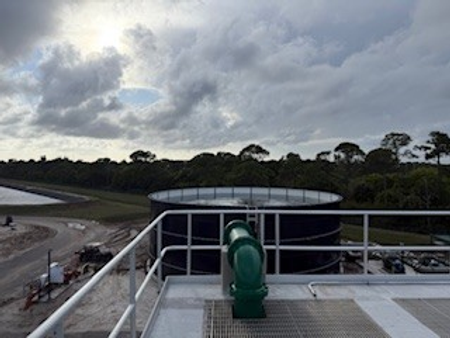
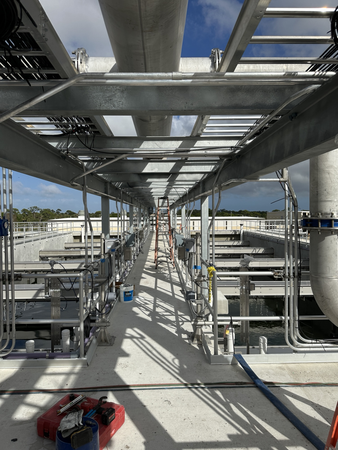
This week, crews are capturing some of the final visuals of the Headworks structure and its equipment, including several bird’s eye views from the tallest structure at the WRRF. These vantage points show the full scale of the new facility and the layout of the treatment basins as the plant approaches the next phase of commissioning. Operators are also conducting clean water flow testing within the Nereda basins. This process allows the team to verify water levels, gate movements, and basin hydraulics before the biological treatment process begins. At the same time, electricians are completing final electrical connections and control checks throughout the facility to prepare the plant for its major testing and tuning period. In the coming weeks, the plant will receive sludge seeding from the donor IWRF, which will introduce the biological microorganisms needed for treatment as the facility prepares to begin accepting raw sewage flows from the collection system.
On the conveyance side, work is beginning on the Moore’s Creek Booster Pump Station, which will play a key role in moving wastewater toward the new Mainland Water Reclamation Facility. This station is designed to redirect domestic wastewater flows from the existing Master Lift Station A and discharge them toward the new treatment facility. The booster station will house three screw centrifugal pumps rated at 150 horsepower each, operating in a two-duty and one-standby configuration to maintain reliable flow.
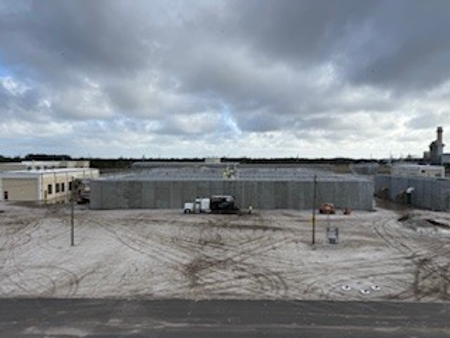
This week, crews began early site preparation activities, including marking the limits for installation of a temporary construction fence. These markings establish the initial construction footprint and help prepare the site for upcoming work as the booster station project moves forward. Once constructed, the station will interconnect with the existing 16-inch force main and provide the pumping capacity needed to reliably convey wastewater through the new system and into the WRRF for treatment.
These projects represent a long-term investment in the community. FPUA is working diligently to modernize critical infrastructure, protect local waterways, and build a more sustainable wastewater system for the people of Fort Pierce. By relocating the treatment facility and strengthening the conveyance network, these improvements help ensure reliable service and environmental stewardship for generations to come.
Also, we’d like to thank all of our partners, contractors, vendors, and crew who are helping us deliver this important project to our customers! FPUA is grateful for this project with industry leaders Globaltech, Inc., Haskell and Hazen, the site designers and build team; TLC Diversified, Inc., re-routing the conveyance system to redirect wastewater flows away from the Indian River Lagoon; Kimley-Horn, the conveyance system designers, and the sub-contractors working so hard to keep this project safe and on schedule.
We are also thankful for the partnership with the City of Fort Pierce in this infrastructure improvement effort that will benefit the Fort Pierce community for generations to come.
Follow all the construction progress of the new Mainland Water.
Reclamation Facility at: https://www.sustainablesewer.net/wastewaterwednesdays
Take a virtual tour of the new Mainland Wastewater Reclamation Facility at:
https://www.sustainablesewer.net/videos
Thank you as always for your support and interest.